Michigan’s Terry Moore to Cover his 40th Masters

Terry Moore is a long-time golf media writer from Grand Rapids who was a 2011 inductee into the Michigan Golf Hall of Fame. He co-founded the original Michigan Golfer magazine in the 1980s, launched the West Michigan Golf Show, and this April will be covering his 40th Masters tournament.
Moore also volunteers in golf as a governor for GAM, and as a player he won the inaugural GAM Super Senior Championship in 2015. Moore is a member of the Golf Writers Association of America and served in leadership with the association.
Question: Who are some of the top golf media at the Masters who have influenced you over the years and why?
Answer: At the top of the list is Jack Berry, the celebrated golf writer for the Detroit News. He's been a friend and a mentor, and he led by example. His work ethic and attention to his craft helped guide me on my way. Also, he recruited me to be a board member of the Golf Writers Association of America, largely the domain of newspaper writers.
Q: Did you ever dream of attending 40 Masters and is it hard to find new story angles?
A: Forty years is a long time, and it's been more of a process than a destination. Maybe because of the locale and its beauty, as well as its singular place in the game, the Masters never gets old or stale. And the incredible pressure to win a green jacket remains palpable and compelling.
Q: The memories you have collected over the years must be massive. Can you narrow it down to your three or four favorite memories and why they are?
A: My first Masters in 1984 was memorable as a credentialed golf writer. I remember being nervous and 'walking on eggshells' even though as a spectator I'd been there before. But as a golf writer, it was new and somewhat intimidating. After a few days, I relaxed and established a routine. I stayed with three friends from Grand Rapids who got badges by renting a local house. As keepsakes, one of the guys purchased four yellow "Litter" caps from some Masters staffers who scoured the course for debris. The photo of us was dubbed, "The Four Littermen."
Q: You did a story for us about the Michigan men who have played in the Masters over the years. Which man and why sticks out to you the most?
A: Chuck Kocsis. As Michigan's most acclaimed amateur, he played 11 times in the Masters, the most by far for any Michigan amateur. Kocsis played with the era's great players and became friends with Bobby Jones and Clifford Roberts. In 1952, he was the low amateur and finished T-14. Given the state of the game, it's highly unlikely another Michigan amateur will ever match Kocsis's Masters record.
Q: Describe from your own point of view how has the media coverage of the Masters changed over the years. Maybe just how the media center itself (or how the media are treated) has changed is interesting?
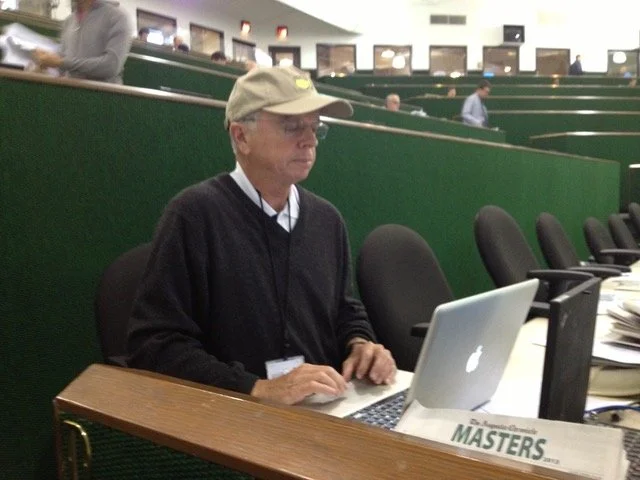
A: The nature of the media business has evolved rapidly over the last 40 years. When I started at the Masters, the deadline pressure writing for a monthly was nil, not that I didn't take it seriously. But with the rise of the internet and social media, filing and posting stories requires constant attention. And since Masters television coverage is so broad and extensive, I try to look for smaller, neglected stories and notebook items. My readers tell me they love them.
Q: How is covering the Masters different than other major tournaments?
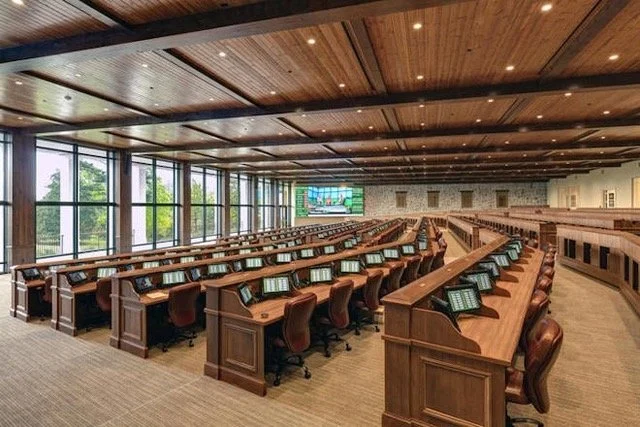
A: The leading golf organizations all accommodate the media to a great degree. But the Masters has the advantage of being at the same venue year after year, and it has all the details refined to both an art and a science. It has embraced technology to make covering the Masters so efficient: transcripts of every interview are compiled digitally, and media can access live press conferences without leaving their assigned seat. The massive Press Building is state-of-the-art with its amenities and services to the media. And it's used only once a year.
Q: What is the best way you have found to cover the Masters over the years?
A: I usually go out in the morning and pick a few favorite viewing areas to get a feel for the course and the conditions. The first hole is a good one because there's a grandstand behind it and you can watch players hit their approach shots to the green and their putts. I'll go back there later on the weekend when the leaders start their round. The year Charl Schwartzel won the Masters (2011), I watched him make an incredibly difficult "hole out" for birdie from way off the green. I also like the fifth hole with its grandstand, the 13th hole because eagles are in play, and the underrated 14th green for its devilish green and its usually being in the shade. I tell friends to bring these essentials: a hat and sunscreen, a small pair of binoculars, a pairing sheet, and the pocket-sized Masters spectator guide.
Q: What changes to Augusta National over the years stand out to you the most?
A: Due to the onslaught of technology in balls and equipment, the lengthening of Augusta National has produced the most changes on the course. For example, the club has spent millions of dollars buying property from the neighboring Augusta Country Club to lengthen just the tee of the iconic 13th hole. But Chairman Fred Ridley has stated emphatically Augusta National will never be an 8,000-yard golf course for the Masters. Outside the course, what the Masters has done to provide free patron parking by essentially buying an entire neighborhood (and removing all but one house) is mind-boggling.
Q: Have you ever been drawn from the media lottery and been able to play Augusta National the Monday following the Masters?
A: In 1995, I was one of 40 media selected to play on Monday. Luckily, I brought along my clubs that year. At that time, the media was welcomed, but it wasn't as well organized as it is today. Without any warm-up, our foursome started on the 10th hole and played a packed course filled with other invited media from Nippon (Japan) Television and CBS-TV. It took over five-and-a-half hours, but we didn't care; we were playing Augusta National with the same pins from Sunday. From the members tees, the length wasn't a problem. But the greens with their undulations were a mystery. I relied totally on my Augusta National caddie.
Q: This year is the 40th anniversary of Jack Nicklaus' incredible 1986 win at the Masters. Does that milestone of his hold a special or significant memory to you either as a member of the media or just general fan of Jack?
A: Yes, that remains one of the all-time great Masters. What I remember most is how Nicklaus was not considered a factor heading into Augusta. In fact, one of Jack Berry's friends and golf writer colleagues, Tom McCollister from the Atlanta Journal-Constitution, wrote that Jack was "gone, done… He just doesn't have the game anymore. He’s 46, and nobody that old wins the Masters.”
After his sixth title, Jack admitted those words motivated him and taped them to his refrigerator. Talk about "don't poke The Bear!"