Mt. Pleasant: Easy Access to Great Golf
By Tom Lang
The Chippewa River can be considered the life blood of central Michigan– figuratively, and for golf, literally – since five of its 13-area golf courses are built along the river as it twists and turns throughout the region.
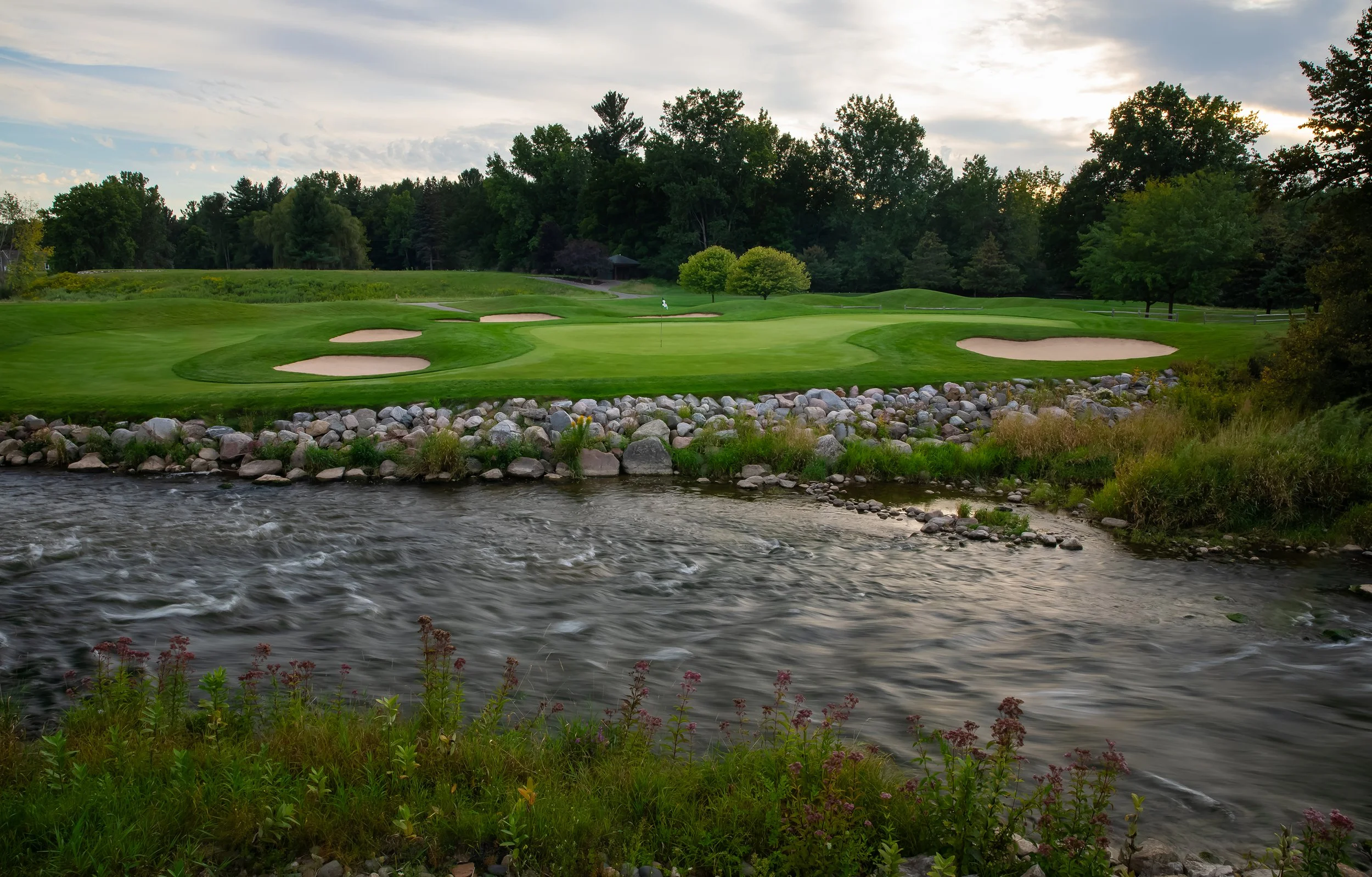
To the west, where the river was dammed decades ago to create Lake Isabella, the unofficial ‘golf river trail’ starts with The Pines at Lake Isabella. The Chippewa River continues running east through Riverwood Resort and Golf Course and then borders the Mt. Pleasant Country Club, before splitting PohlCat (with my favorite ‘river’ hole, No. 2) and eventually Buck’s Run, the latter considered one of Michigan’s premier courses as well.
The PohlCat is well known for its designer, former PGA Tour winner Dan Pohl, a Mt. Pleasant native who opened the course in 1992 to national fanfare with special guests Freddie Couples, Dave Stockton, the NFL’s Dan Marino and local favorite NBA player Dan Majerle at the grand opening.
“The location is perfect, centrally located in the middle of Michigan,” Pohl told me about why golfers should give golf in the Mt. Pleasant area a try. “Depending on where you’re coming from, it can’t be more than a couple hours in any direction.
“But the main thing is it’s just a hospitable place,” Pohl added. “And the golf … with us and Buck’s Run and Riverwood and The Pines and the (Mt. Pleasant) Country Club, with Eagle Glen added in there, it’s a great golf area to have a little three- or four-day vacation. You’ve got good lodging, lots of good activities, there’s the Soaring Eagle Casino close by. And lots of good places to have a good meal.”
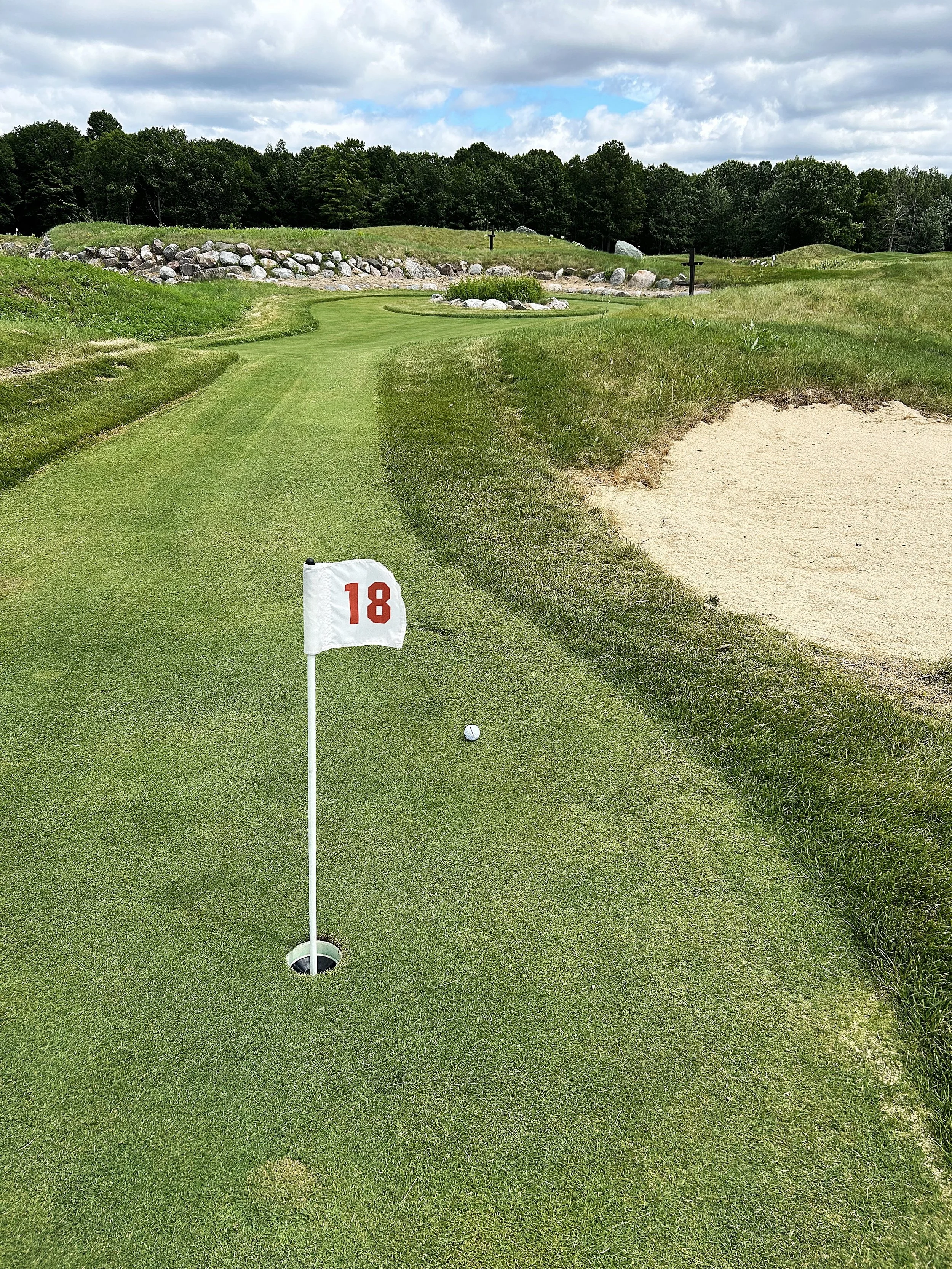
Pohl said he believes golfers will feel they are greatly appreciated when they come to Mt. Pleasant. When I recently entered the front door of the pro shop, I could hear Pohl ‘holding court’ overlooking hole 18, where golfers can get good food and a cold beverage before or after their round.
“We love the fact that like right now I’m sitting here with 8 guys that came in from Canada (and metro Detroit) who are just loving this area. They got a package deal here, and at Buck’s Run and Eagle Glen,” Pohl said. “It’s a nice deal for them and that’s what we like to see.”
The next day I played Eagle Glen, outside of Clare, for my first time ever, and I bumped into the same 8 guys Pohl was entertaining. They couldn’t stop talking about how Pohl gave of his time at their dinner, and when they ran into him on the course beforehand he provided some solid chipping tips.
At Eagle Glen, after coincidentally playing through those same foursomes on the 5th hole, I met up with a two-some and finished the round with them. We had a great time swapping small-world stories and shared a speaker-phone call to the co-designer, Ray Hearn, who developed the course from a former hay field on a shoe-string budget, alongside the revered designer, Jerry Matthews. Hearn said the natural flow of the land allowed for almost no moving of dirt except building tees and green complexes.
“Great layout, very fair. Some tricky greens but lush, lush conditions,” said Norm McGlinnen of Ann Arbor, one of my two unplanned golf partners that day. “Never really got a bad lie. Good pace of play, and overall, I’ll be back. It’s a course I could play easily once a week. If people are (playing courses up north) and you’re going up 127 (through Clare) it’s no more than 10 minutes off the beaten path.”
Personally, I liked Eagle Glen’s wide-open feel, and great selection of tees for various player abilities. The starter that day was a genuinely nice young man who is wheelchair bound and was schedule to play in the then upcoming state tournament for adaptive golfers in East Lansing.
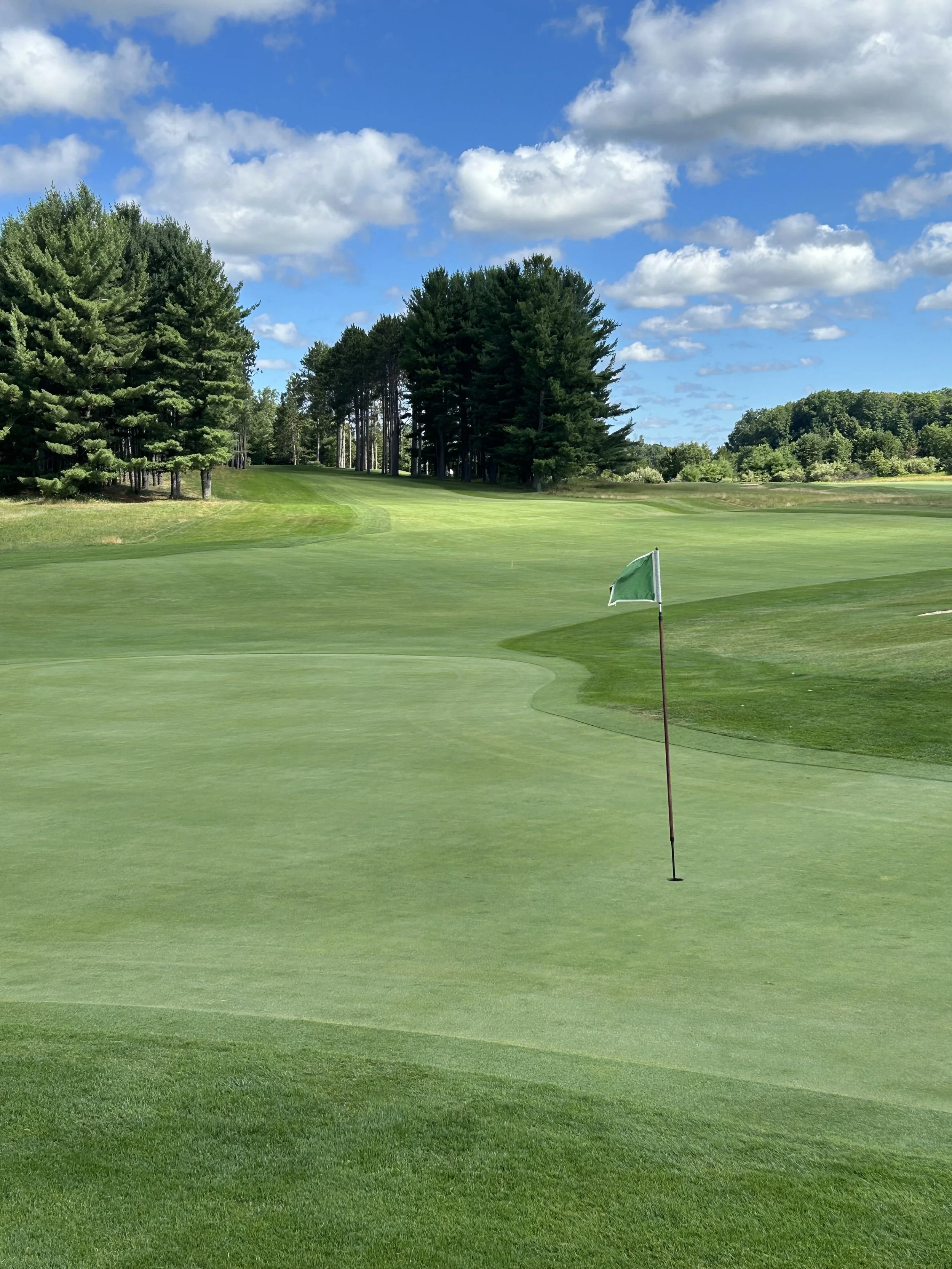
Two of the first three holes on the course are shorter par 4s, allowing golfers to get off to a good start and feel good about their game moving forward through the round. The only trees that come into play, other than a huge willow tree on the par 3, 6th hole, are a tunnel of tall pines at the No. 3 tee, heading downhill to an attractive green complex.
The Shortest Short Course:
Buck’s Run Golf Club, now celebrating its 25th year, is best known for its full length 18-hole championship-quality gem along the Chippewa River. Yet it’s received a lot of notice as well the past quarter-century for its short course on the pond island just steps outside the pro shop door. I always thought of it as purely a putting course, so I was a little surprised when someone told me what sounded odd at first: “Sure, you can get around the course with a putter.” I never realized it before, but it’s designed to be a pitch and putt course. Toting along a wedge comes in handy and is very acceptable on this layout, which I call the shortest short course in the state.
“People love it because it’s something different. There’s not really anything like it,” said assistant golf pro Ryan Kade. “Groups will come off (playing 18) and use it to settle bets and things like that. Families love to play it; kids will come out and play. Lots of couples.”
At least one-third of the holes turn and bend enough that you can’t get to the hole just putting it. So, put your ball in the longer grass that shapes each hole and chip away. The rule, however, is that if you go in the water or in a sand trap, pick up your ball and place it back on the putting surface with a stroke penalty.
When I played midweek, there was a mom, dad and 8-year-old child playing, plus a foursome of men in their 20s and 30s and soon after, two 20-something men walked in from the parking lot.
On Buck’s Run, there are a ton of great views and challenges, but the closing holes are two of the most scenic and challenging of any course you’ll want to play. The par 3 17th is a classic, stunning visual with a forced carry over the Chippewa River right where some subtle rapids form. What follows is 18, a long par 4, where the two back tees are a forced carry over the lake to a long fairway stretching from right to left. The two shortest tees for seniors and others are a straightaway shot without carrying water, but for all golfers, the green is a peninsula with water on three sides.
A little further west of ‘the river trail’ is Tullymore and its partnering course St. Ives. Tullymore was nationally ranked right out of the gate, then after a break from the national rankings it has recently re-appeared there. A must try if you have not.
Looking South:
To the south of Mt. Pleasant is Maple Creek, Pine River Country Club (open to public play) and The Emerald, the 2022 Michigan Golf Course of the Year.
Pine River turned 100 years old in 2024, a couple years after the property did some redesigning of the green complexes on the original front nine. The natural rolling terrain means almost never a flat lie.
One of Michigan’s all-time best amateurs, Randy Lewis, has been a member there for decades. Lewis won two Michigan Amateurs, won the 2011 USGA Mid-Am at the age of 53 to be the oldest champion ever, and that got him an invitation into the 2012 Masters at Augusta National, where he won some crystal for being closest to the pin in the Wednesday Par 3 contest. He’s a member of the Michigan Golf Hall of Fame.
Lewis told me as we traversed the course: Pine River is challenging, “but it’s not so hard that if you’re a good player you’re going to have a really good round. It’s very accessible, and logistically where it’s located, you’re not going to have a problem getting here and getting on.
“I think people would be really surprised by the movement of the ground. The character is in hitting a lot of different shots from different lies, with the ball above your feet, below your feet, uphill, downhill. That’s what I’ve always loved about the front nine, you do have to hit a lot of different golf shots – which is fun.”
The Emerald might be one of the most highly touted courses that few people have heard much about. Yet, you don’t earn Michigan Golf Course of the Year for nothing, nor be the home of past high school state finals, without being a good track. It sits right along US 127 between St. Johns and Mt. Pleasant.
“Their greens are phenomenal,” Lewis said. “I tell people all the time, I would put their greens up against almost any greens in the state, and I’m including some of the private clubs. Their greens are as good as they get. They’re firm, they’re fast, they’ve got a lot of movement to them. I play there several times a year. And anytime I qualify for a USGA event, I’ll spend 2-3 days there the week before, just putting… because their greens are exceptional.”
Due to its central location in the Great Lakes State, many times Mt. Pleasant is considered a stopping point for traveling Up North – a way to break up the trip. But at least once in your golf travels, you need to make it your first and only stop. Learn more at: www.meetmtp.com