100 Years: Marywood in Battle Creek
By Tom Lang
The 1950s and 60s were a heyday for golf in Battle Creek. Kellogg’s and Post were behemoths worldwide in the breakfast cereal production world, enough to support four private clubs in the now smaller city in west/central Michigan.
One of the four, Marywood, has been public since the 2000s, about the time its two-story clubhouse burned to the ground.
Marywood turns 100 years old in 2026. The routing and landforms are very private club feeling, but if you have two $20 bills in your pocket, you can play a lot of good golf at today’s Marywood.
When I visited Marywood for the first time, on the last day of September, and I played through a group on the 4th hole, they commented that because they only walk, they never play the back nine. That unusual comment gave me some indication of what was ahead.
And they were not wrong.
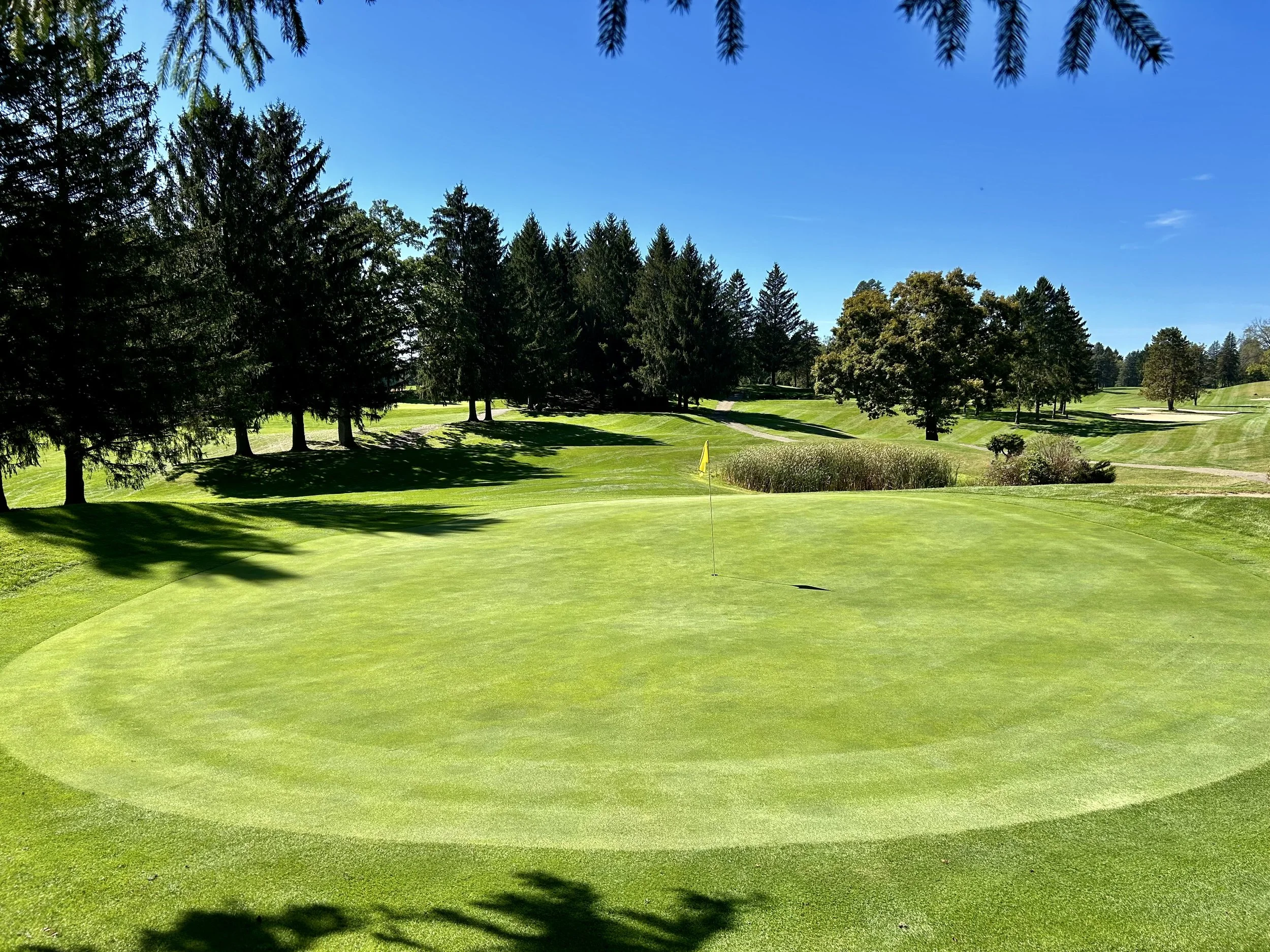
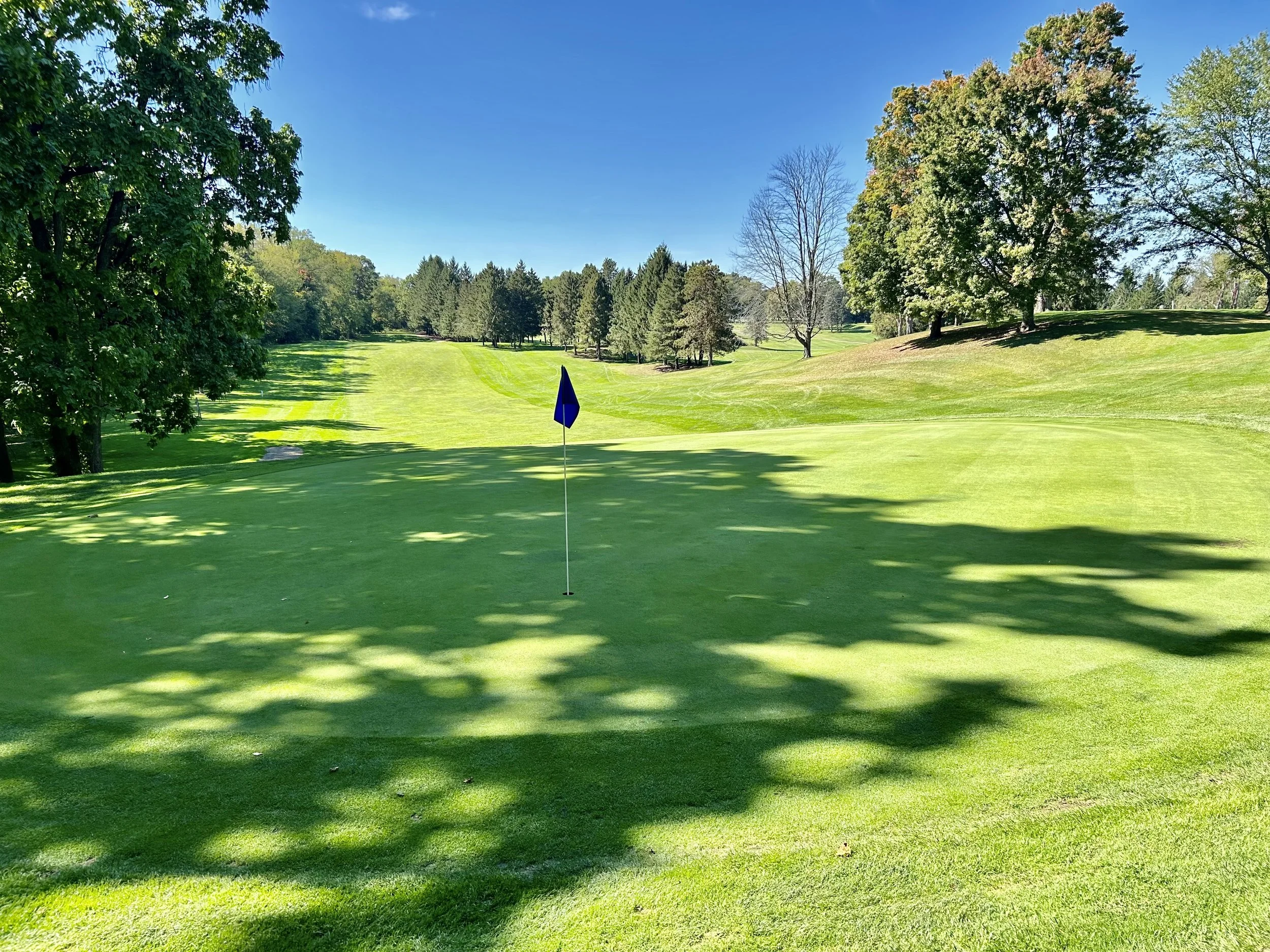
The back nine is very hilly, yet had a cool routing through the ups and downs and side hill lies of the landscape.
My first impressions of Marywood: the overall look of the property is gorgeous. So, it’s easy to see why this land was chosen for a country club 100 years ago. It seems remote enough yet still geographically close to a shrinking Battle Creek population that the course seems to be hidden from most golfers’ minds. A nice average-sized crowd was out playing the course with not-yet-fall-color gorgeous weather to enjoy.
I feel that club selection is key because of the hills and valleys. If you don’t hit it far enough and catch the face of a hill it will kill your distance. But if you can clear most crests and your golf ball catches the backside, you can get another 20-40 yards rollout out on many shots. In a few places, playing your ball off a few side hills to bounce into the green can be a successful strategy as well.
The course has a great selection of dogleg holes and variations in the par threes, yet while many holes play fairly straight away, the hills and mounding add a ton of character.
Can I say this now-public course is in pristine country club condition? No. But for a lower-than-average cost it’s a great round of golf, and there are signs everywhere that the grounds crew is working hard to make it nice for all golfers.
The bunkers have plenty of sand, so you won’t have thin lies or hard surfaces, but they are rough looking around the edges. I’m not sure if that’s intended for a more rustic old-course look, or if there’s not enough staff to keep them trimmed pristinely. Overall, I simply felt there’s a genuine 100-year-old look to the course, combined with great use of the land.
Bruce Matthews III, the well-known course designer from the Matthews family we featured in the October magazine, actually worked at Marywood as the GM from 2003-13 as it went public. He and his wife spent that decade putting in thousands of hours a year to manage it and make some changes to the layout along the way.
Arguably the most noticeable were enlarging the 13th green and turning Hole 14 from a par four to a par 5 by adding tees.
Matthews said that Marywood was his mom’s favorite golf course before he arrived there, when she played it in the 1970s and 80s. Marywood was known for its numerous floral displays all around the course and property. The course is across the road from Saint Mary’s Lake.
Two factors allowed four private clubs to exist in the Battle Creek area for so long: the cereal companies, and the fact the National Guard Base at the airport and Fort Custer is part of the city drew many new residents to the region after World War II.
The Battle Creek Country Club became 18 holes in 1922, Riverside (now public) had its 100th birthday a couple years ago, and Bedford Valley was built as a private club in the mid-1960s. It’s been owned by Gull Lake View Resort since 1988 and is also public. Only BCCC, the remarkable Willie Park, Jr. design, remains fully private today.
More information on Marywood can be found at: http://www.marywoodgolf.com/