100 Years: A Family Golf Legacy Like No Other
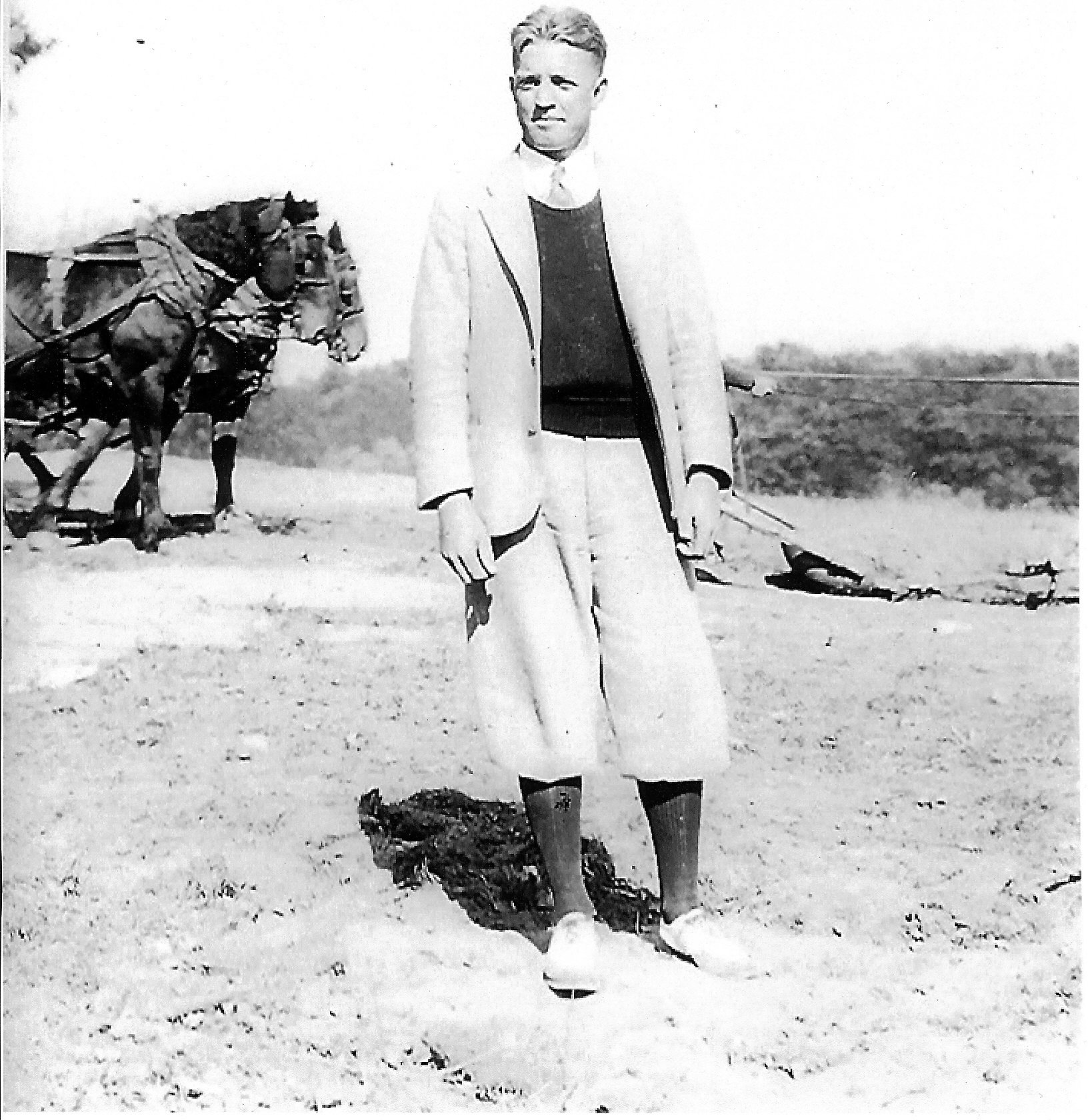
The Matthews family’s huge impact on golf in Michigan
By Tom Lang
Michigan has its Big Three automakers – but our state also boasts the Big Three legacy of golf course design – the Matthews family.
As much as the auto industry means to Michigan’s economy and worldwide identity, it can legitimately be argued the Matthews family has had a comparative impact on Michigan’s golf industry and the national admiration as a top golf mecca.
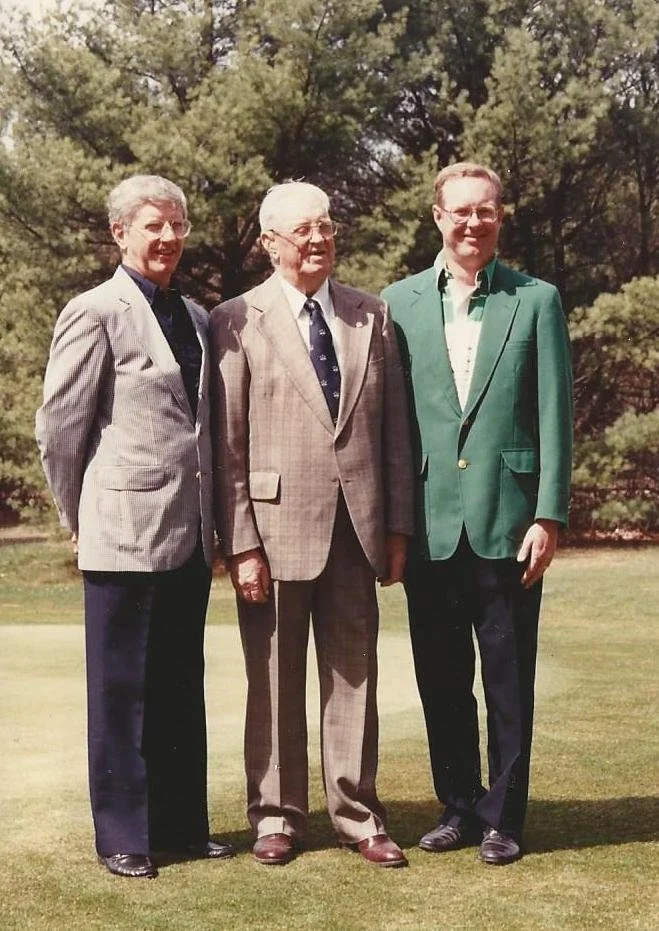
W. Bruce Matthews, Sr. started it all in 1925, fresh out of college at Michigan State. He was followed by his son, Jerry, who carried the bulk of the course design business with the many associates he hired, and on to grandson, W. Bruce III.
“No other family has had a wider reaching impact on the game of golf in our state,” Kate Moore, former executive director of the Michigan Golf Course Association once told me. “With course design and renovation as well as maintenance and development, the Matthews family has touched every corner of Michigan for decades on end.”
The state of Michigan has more than 800 golf courses across the two peninsulas, and nearly one-third of them have been original designs, expansions or renovation projects completed by one or two of three Matthews.
“They are certainly the most prolific course architects in the state of Michigan,” international award-winning course designer Mike DeVries, known for Michigan’s nationally-ranked Kingsley Club and Greywalls, told me. “They’ve had a tremendous impact on all levels; particularly they have contributed a lot in the daily fee and resort sector. They have really championed a lot of that area of golf, and that has had a profound impact on the everyday golfer.”
Paul Albanese, a disciple of Jerry who designed TimberStone, Sage Run and Sweetgrass in the Upper Peninsula, echoed similar accolades of how the Matthews family helped make Michigan the summertime golf capital.
“I think (the Matthews) are the reason golf grew so significantly in this state, because they created golf courses that were accessible,” he said. “That’s part of why we have more public courses in the state than anywhere else. If you ask how that came about, who designed all these courses? They helped the developers understand the type of facility they needed to build to keep their business going, to grow the game so more golfers will be out there and visit their facility. Jerry felt it was very important to not push people out of the game because the course was too difficult or too expensive. He wanted golfers to be out there and to grow the game.”
The praises don’t stop there.
“There is no other family name more deeply connected to the excellence of Michigan golf and the national reputation of this state as the best place to play in America,” said Bill Hobson of Michigan Golf Live. “In every part of the state, the masterful vision and artistry of the Matthews family is on display and appreciated by golfers flocking to Michigan from all over the nation. We are blessed to have the family influence on the game.”
Jerry passed away inside the Grand Hotel on Mackinaw Island on Sept. 15, 2022, about 90 minutes after receiving a lifetime achievement award from Hobson. W. Bruce, Sr. passed away in 2000.
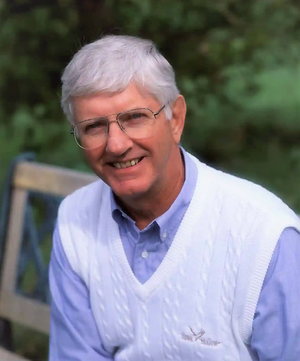
W. Bruce Matthews III, age 71, lives in Manistee and still dabbles in designing, remodeling and enhancing the green grasses, blue waters and white sands that adorn the hundreds of Michigan playpens that tens of thousands of golfers enjoy each season. He also spent many years teaching an extension class through MSU Golf Course Design and Construction. Jerry taught at MSU for 11 years, after Bruce, Sr. led the establishment of the Michigan Turfgrass Foundation at MSU. All three are MSU graduates. Jerry also served in the very prestigious role of president of the American Society of Golf Course Architects.
Mark Magee, the former course superintendent at the Country Club of Lansing for more than 35 years and who also did some design work with Jerry, is also a grandson of W. Bruce, Sr.
About 10 years ago I spoke with the now-deceased Pete Dye, one of the most famous course designers in the world.
“It’s very unique for them to do it all in one state,” Dye said at that time from his Florida home. “Of course, Michigan has so many golf courses, it’s unbelievable. The Matthews have done a wonderful job up there. It’s amazing what they’ve done in one state, and to have so many designs in that area.”
Veteran golf reporter Jack Berry, a Michigan Golf Hall of Fame member along with Bruce, Sr. and Jerry Matthews, once said: “Jerry has been like Johnny Appleseed in Michigan. He’s got a course every place, in every county it seems like, every township.”
And yet another Matthews disciple is Ray Hearn, who is still very active in course designs and in more recent years has seen a burgeoning business in revamping golden age courses back to their original designs, all across the country. His most recently completed Michigan design was redoing The Cardinal at Saint John’s Resort in Plymouth, which hosted the LIV tournament. Hearn has also been responsible for major improvements to various Boyne courses, and a number of additional in-state projects.
“Jerry loved fly fishing,” said Hearn, who was Jerry’s senior designer for a decade. “When I started my own company, Jerry gave me a significant chunk of his work at that time. It helped jump start my company. I will be forever grateful to Jerry for his very kind gestures. I considered Jerry a good friend.
The Matthews were outdoorsmen – a hallmark trait they took into every course design. They hunted, fished and played golf among other outdoor activities for fun; and when it came to work they let nature lead the design process as if the golf course was already there from the beginning of time.
“What I appreciate most about all Matthews’ designs is they use the natural terrain of the property,” Bob Stipcak, superintendent at Timber Ridge, once told me. “You can find any golf hole at Timber Ridge, go into the untouched woods and see the exact same flow and topography. The slopes are there for a reason for natural runoff and drainage.”
Other well-known Matthews’ designs include:
Manistee Golf & Country Club (Bruce Sr.)
MSU’s Forest Akers (original, Bruce Sr.)
Buck’s Run (Jerry)
St. Ives (Jerry)
Hawk Hollow (Jerry)
A-Ga-Ming (Jerry)
Elk Ridge (now dormant, Jerry)
Timber Ridge (Jerry)
Angel’s Crossing (Bruce III)
Hidden River Golf and Casting Club (Bruce III)
The Beeches (Bruce III)
The last long conversation I ever had with Jerry was in 2014 in his then home-office in Laingsburg. This is what some of that conversation produced:
“I like Michigan, and I was really lucky to come along with my dad at that point in history,” Jerry said. “The second golf boom was starting in the early 1960s and there was so much work, and I was learning so much.
“I stuck with it and kept doing it. And I learned I’d rather be here than spending so much time in airports or on planes.” Translation: no pressing need to leave Michigan to design courses elsewhere, although each did now and then.
Bruce, Sr. got his start working in Florida in 1925 as a fresh MSU graduate on not just designing, but building some courses in Florida and Georgia, before returning home to Michigan full time at the start of the Great Depression. His first solo design was the 18-hole layout at Manistee Golf & Country Club along Lake Michigan in 1929. He had several projects designing in Michigan, but also in managing and running clubs in West Michigan as the economy ebbed and flowed across the decades.
Eventually, Bruce, Sr. purchased land in Grand Haven and built the Grand Haven Golf Club, which opened in 1965 to high acclaim. There, multiple extended family members, including W. Bruce III, worked in their younger days and learned the golf business. They eventually sold Grand Haven Golf Club to the Rooney family in 1998, who later enlisted Jack Nicklaus who turned the club into the American Dunes we know today.
The Matthews’ Touch:
Jerry said when he began, course design was more conservative, was intended for the owner to make money in golf, and to develop features that kept maintenance costs down. That was his base and said he would not change those courses. The three generation designers were consistent in creating courses to attract the masses.
“My basic theory of design is: I think it should be enjoyable, I think it should be challenging and it should be fun, and there’s quite a gap in there sometimes,” Jerry said. “I also think very strongly that it should be beautiful. I want it to be memorable so they’ll return many times.”
Neither Jerry nor Bruce III would fully commit to naming a favorite course, but in addition to Bucks Run, Elk Ridge (now privately owned) was high on Jerry’s list.
“Do you have children?” he asked in reply. “Which is your favorite one?”
Angels Crossing and Hidden River did jump out to Bruce III.
“Both of those are really nice golf courses, very playable for everybody, and challenging if you want them to be. Just step back a tee.
“I’m very fortunate,” Bruce III added. “It’s a great life. It was fun growing up on the golf course; all my cousins, brothers and sisters, everybody got to work on the golf course as a kid. And it’s fortunate my whole family has been involved some way or another.
“I’m really proud the family’s been doing this since 1925. That’s a long time. I don’t know if any other family could say the same.”
No, they cannot.