Island Resort’s Expanding Golf Identity
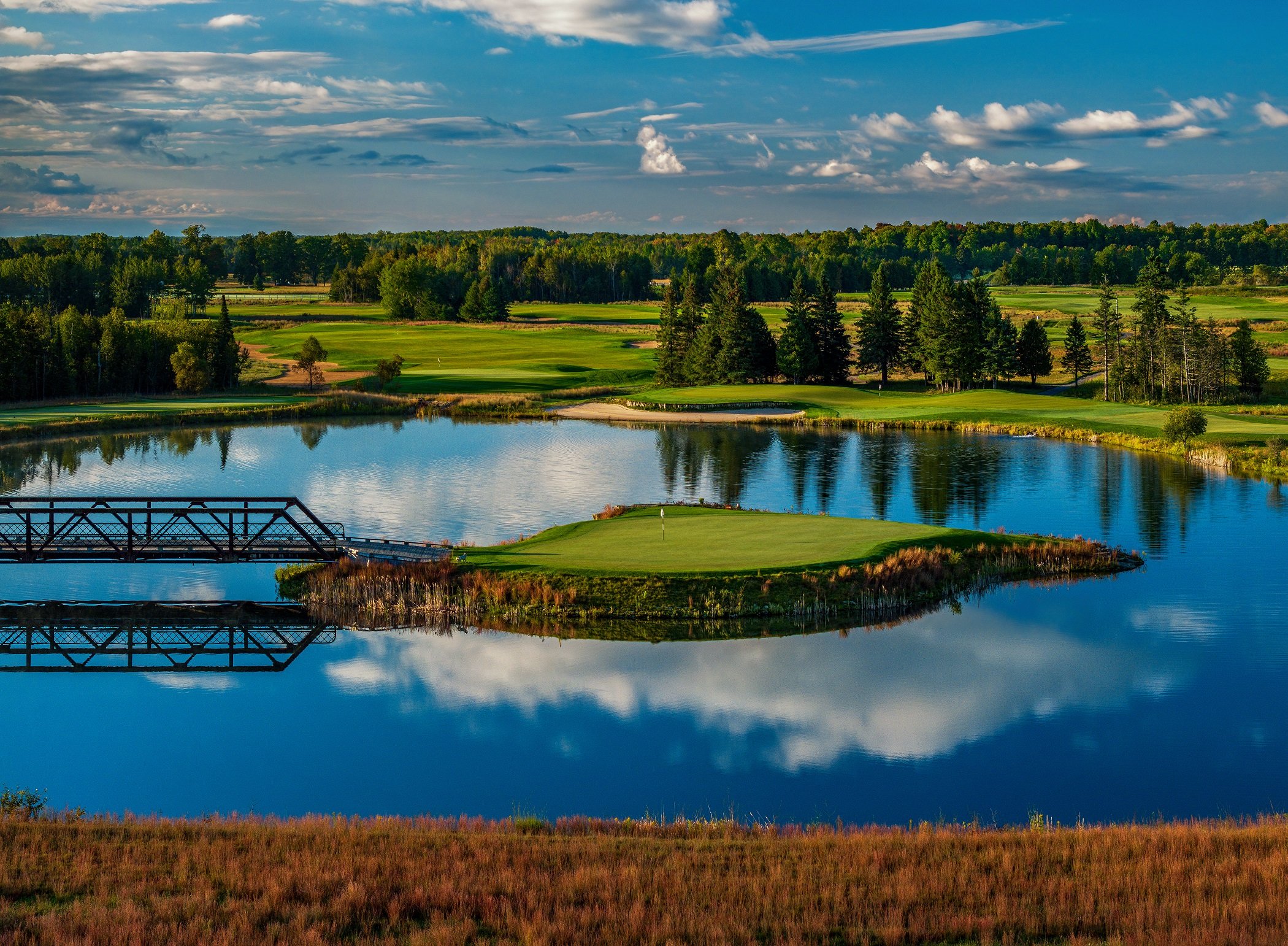
From the Motor City to the Upper Peninsula, Michigan golfers are discovering one of the Midwest's great golf destinations — one that continues to evolve — a place where long summer days, temperate weather, and diverse landscapes combine to create one of the premier summer golf destinations. What began in northern lower Michigan several decades ago with the development of many top golf resort destinations has steadily expanded, stretching north across the Mackinac Bridge and into the rugged beauty of the central Upper Peninsula.
It’s here that Island Resort & Casino near Escanaba has emerged as one of the Midwest’s most compelling multi-course golf destinations. The journey itself — across the Straits of Mackinac and along the scenic stretches of U.S. 2 — creates a sense of arrival.
It feels removed, almost untouched, a place where golf exists in its purest form.
What started with a single standout course has evolved into an award-winning multi-course experience — one now entering a new chapter with the debut of the new 9-hole Cedar Course. The addition of the Cedar Course, which will open for preview play in Fall 2026, is not simply an expansion. It is a statement about identity — one rooted in architecture, strategy, and a deep respect for the traditions that continue to shape the game.
The name Cedar (Kishki in Potawatomi) derives from its status as one of the four sacred medicines, known for its protective and purifying properties.
To understand the Cedar Course’s significance, it helps to begin with the foundation already in place. Sweetgrass, the resort’s original course designed by Paul Albanese, opened in 2008 and quickly became the gateway experience for first-time visitors. It was voted the 2023 National Golf Course of the Year just 15 years after play began.
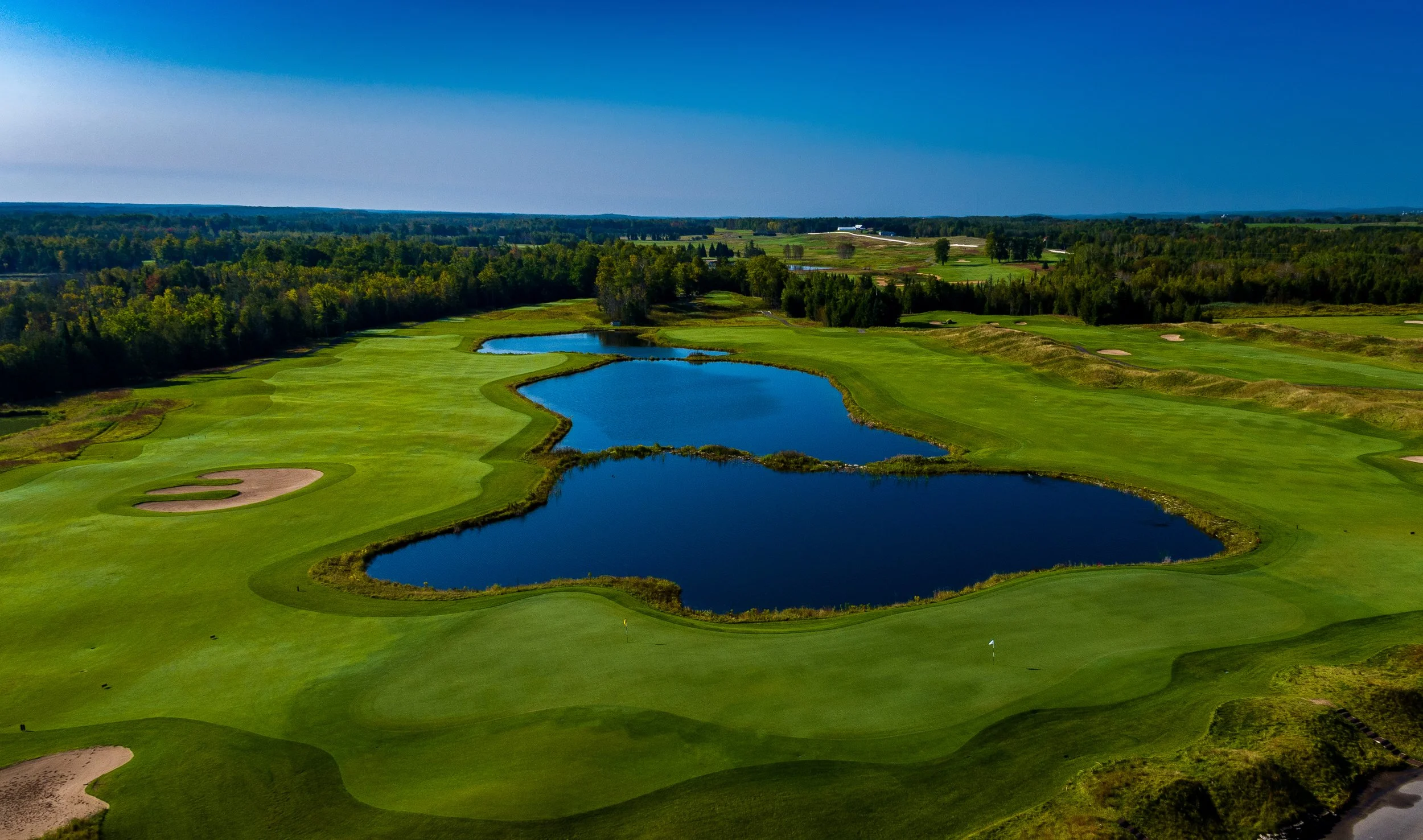
Set across open, prairie-style terrain, the course, which is home to the Island Resort Championship, one of the premier stops on the EPSON Tour – the official “Road to the LPGA” – is defined by sweeping fairways, native grasses, and expansive sightlines that give it a distinctly Midwestern feel. But beneath that openness lies architectural nuance.
Its green complexes are where Sweetgrass truly distinguishes itself. Drawing inspiration from Golden Age templates, Albanese incorporated features like a Redan, a Biarritz, and even a double green — subtle nods to the strategic ideas that shaped early golf design. The par-3 12th, with its classic Biarritz contouring, and the island-green 15th remain two of the most memorable holes in the region.
A decade later, Albanese returned to the property with a dramatically different vision.
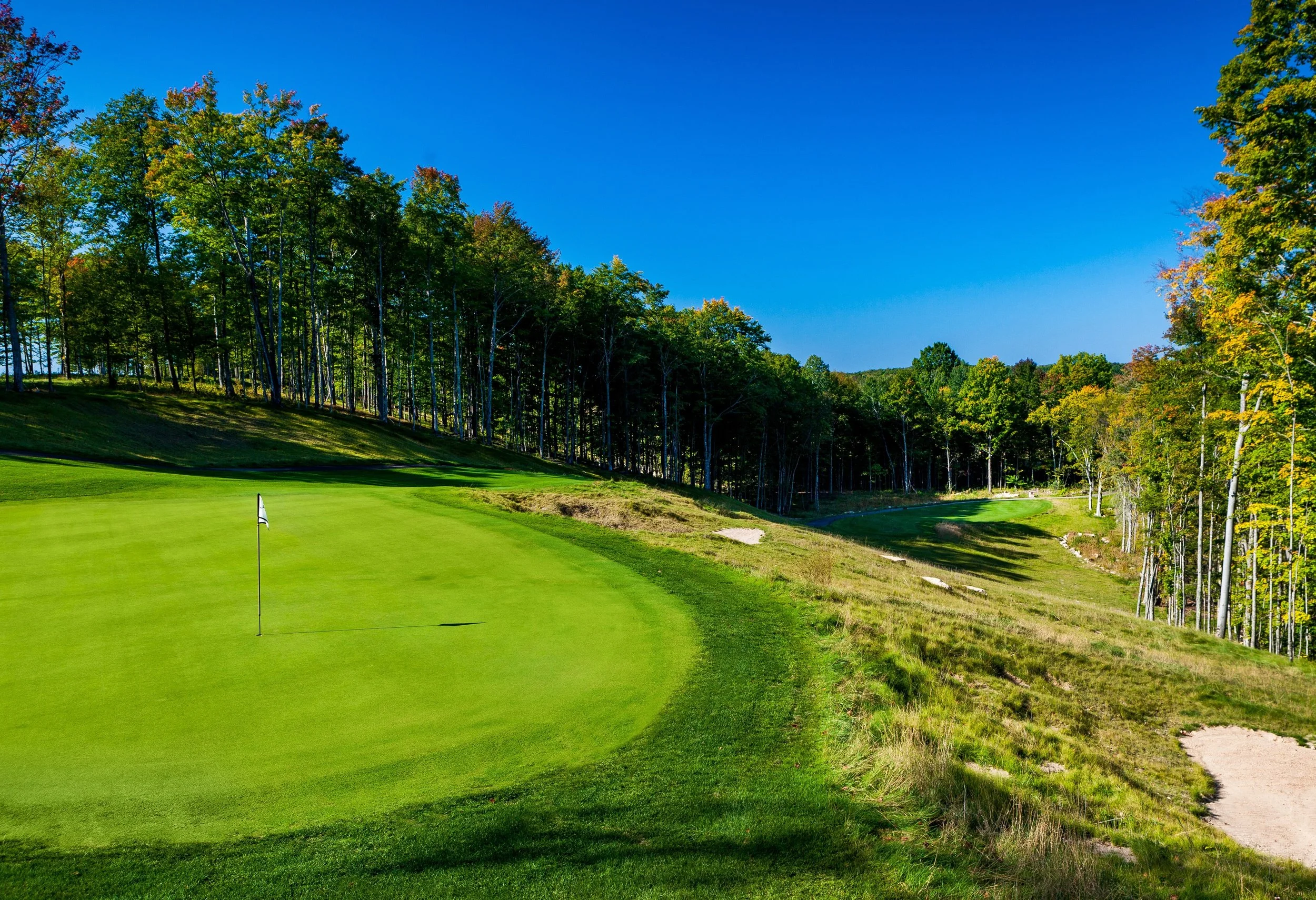
Sage Run, which debuted in 2018, offers a more rugged, adventurous counterpart. Routed through hardwood forests and across exposed ridgelines, the course introduces elevation changes rarely seen in Midwestern golf. It’s bold, physical, and visually striking — an experience that feels closer to the linksland traditions of the British Isles than the flatland courses many golfers associate with the region. The course was named to Golf Digest’s prestigious list of “Best New Courses, 2019.”
Together, Sweetgrass and Sage Run form a deliberate contrast — open versus enclosed, lyrical versus muscular, traditional versus dramatic. That duality has become a defining strength of Island Resort. Now, with Cedar, the resort adds a third dimension.
“We are very busy in the summer and often booked on both of our other courses in the morning,” says Tony Mancilla, General Manager for Island Resort & Casino. “We decided to add nine holes to accommodate our guests looking for early morning tee times before they head home. We are not adding to Sage Run but making these nine holes their own course.”
At Island Resort & Casino, expansion has never been about scale for its own sake. Each addition is rooted in intention — an effort to build something lasting, not just new. The Cedar Course, a nine-hole layout also designed by Albanese, represents the purest expression of that philosophy.
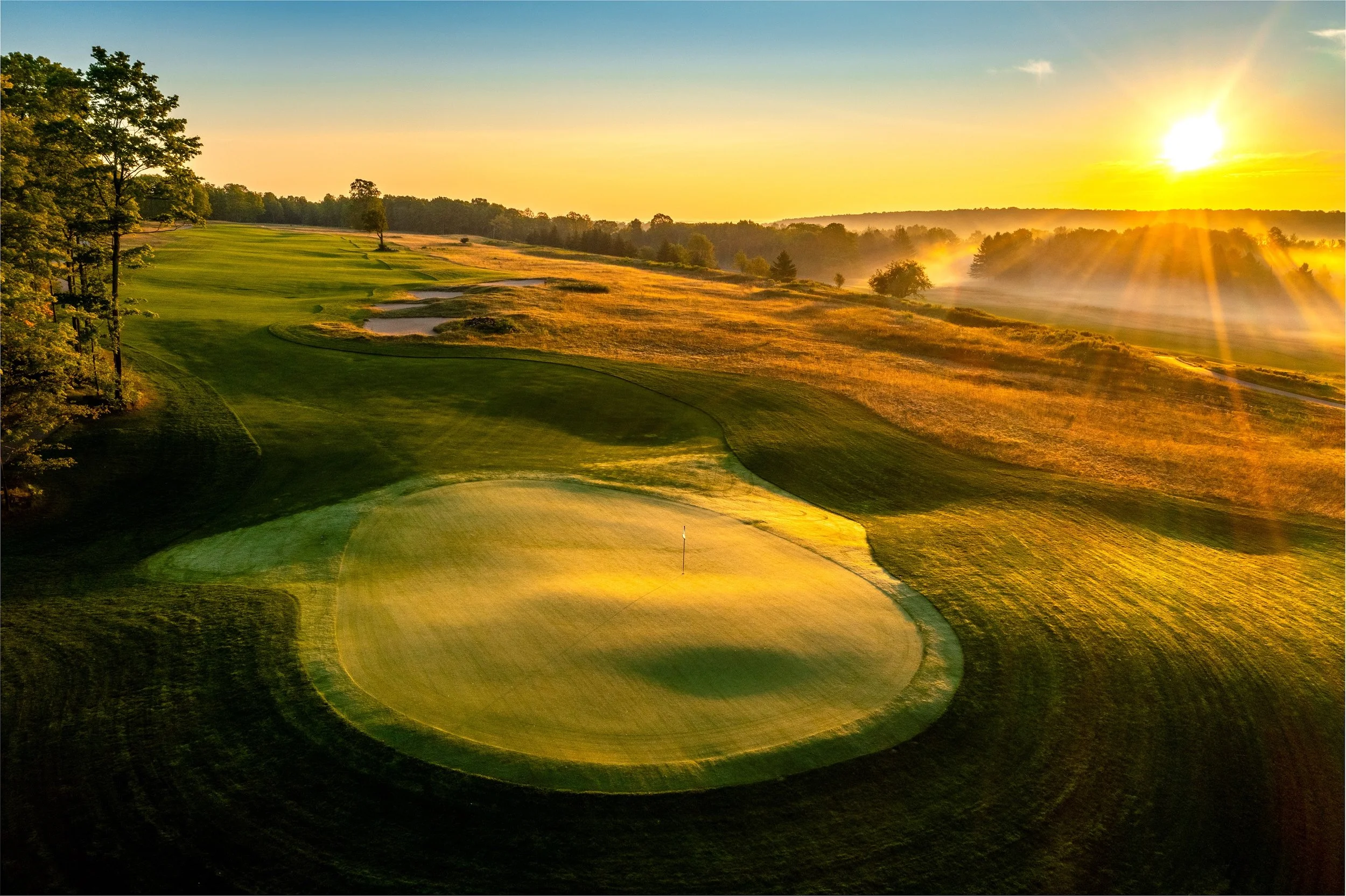
Rather than relying on length or spectacle, Cedar is built around strategy. It draws directly from the Golden Age of golf course architecture, emphasizing angles, decision-making, and imaginative green complexes.
“We are taking some great concepts from the golden age of course architecture in the early 1900s and incorporating them into the Cedar course,” says Albanese. “The course will feature some of the game’s most popular green templates like the Punchbowl, Double Plateau, and even a Juniper hole like the famous 6th hole at Augusta National. Cedar gives golfers a chance to experience the strategy, creativity, and fun that defined that era — without it feeling forced or artificial.”
From the opening hole, that philosophy is clear. The first, known as “The Bottle,” narrows as it moves away from the tee — an inversion of modern design tendencies that typically widen landing areas. Inspired by the famed National Golf Links of America, the hole immediately asks a question: how aggressive do you want to be? The farther you push, the more risk you assume. It’s a theme that carries throughout the course.
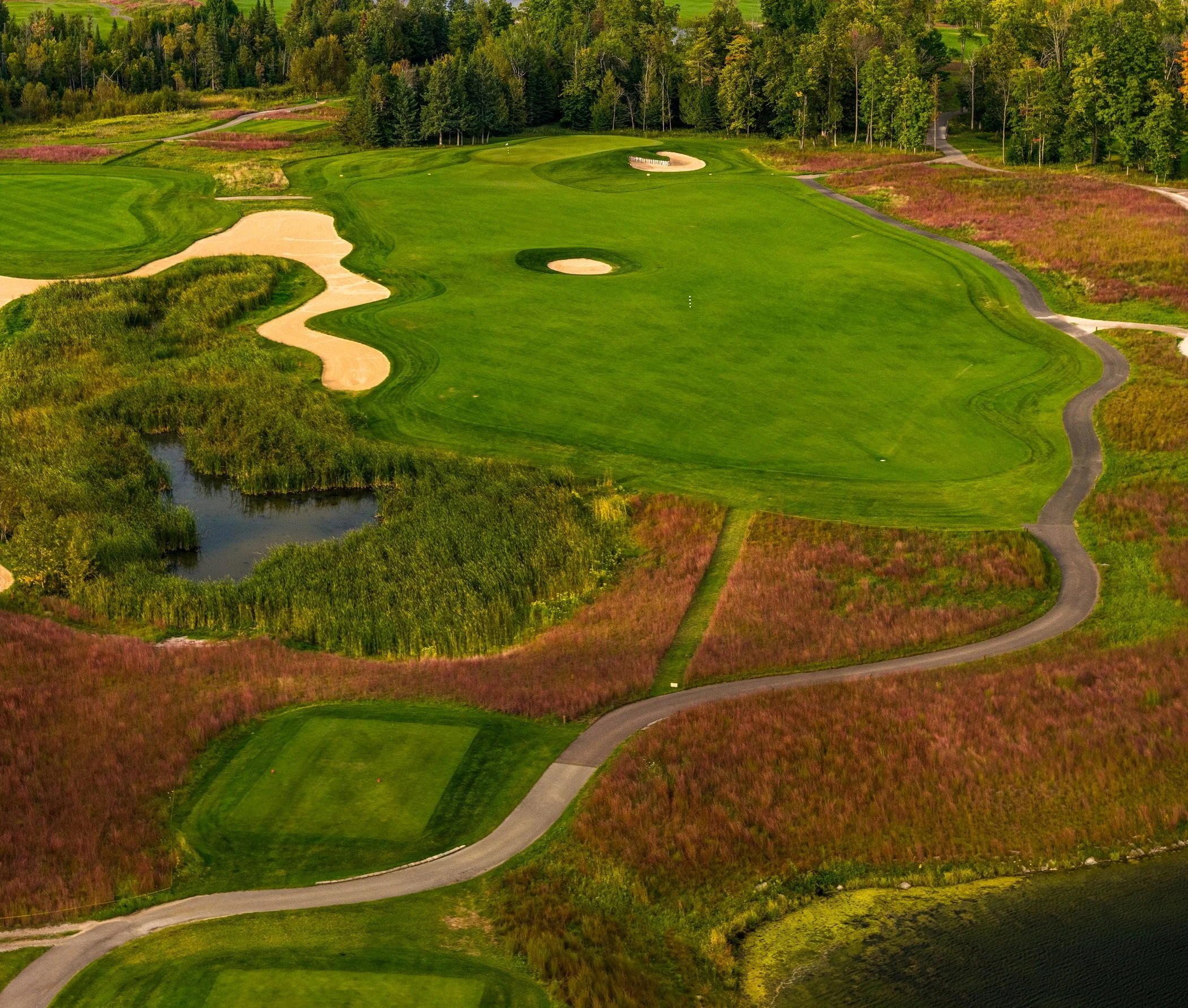
If Cedar’s opening establishes its intent, its centerpiece defines its ambition. The par-5 sixth hole is a layered, three-shot design that incorporates multiple Golden Age concepts into a single experience. A deep Himalaya bunker guards the tee shot, while a sprawling Sahara hazard dominates the landing area. From there, the hole transitions into a boomerang-shaped green inspired by Alister MacKenzie — a surface that encourages creativity as much as precision. It’s not just a hole — it’s a lesson.
Each element of the Cedar course serves a purpose, requiring golfers to think through positioning, angles, and risk. Aggression is rewarded only when it’s calculated. Patience, often overlooked in modern design, becomes a central virtue. Just two holes later, Cedar shifts tone.
The short par-4 eighth, modeled after the iconic 10th at Riviera Country Club, presents a classic risk-reward dilemma. The fairway invites players to attack, tempting them to drive the green. But the putting surface — a long, sharply contoured target — demands exact placement. Miss in the wrong spot, and the advantage disappears instantly. It’s a reminder that great golf architecture isn’t about distance — it’s about decisions.
For architecture enthusiasts, the Cedar Course will feel like a curated journey through design history. For everyday golfers, it simply feels different — in a way that’s both engaging and accessible. Cedar isn’t meant to overwhelm. It’s meant to invite exploration, encouraging players to see the game through a different lens.
The Cedar Course is part of a broader $19 million investment that reflects Island Resort’s confidence in the future of golf and group travel.
Alongside the new course, the resort has added nearly 17,000 square feet of convention space, anchored by a grand ballroom capable of hosting up to 1,200 guests. The expansion has already increased midweek occupancy and positioned the property as a more competitive destination for corporate events, weddings, and regional gatherings.
A new Sweetgrass golf shop further enhances the experience. Designed in a traditional Hardy Plank style, the 3,000-square-foot facility overlooks the course’s finishing holes and serves as both a retail hub and a social gathering space — complete with terraces, locker rooms, and communal areas.
Together, these additions reinforce a simple idea: golf is the centerpiece, but the experience extends beyond the fairways. For traveling golfers, Island Resort’s appeal has always been rooted in variety and value.
The popular “Perfect Foursome” package allows guests to combine rounds at Sweetgrass and Sage Run with two more Upper Peninsula celebrated courses — Greywall’s and Timberstone.
Greywall’s, with its dramatic rock outcroppings and fescue-lined corridors along Lake Superior, offers a rugged, almost otherworldly experience. Timberstone, set in the hills near Iron Mountain, winds through forests and wetlands, delivering elevation changes and scenic vistas at every turn. With the addition of the Cedar Course, that foursome effectively becomes a five-course rotation — adding a strategic, Golden Age-inspired dimension to an already diverse lineup.
It’s the kind of trip that appeals to a wide range of players: architecture enthusiasts, competitive groups, and casual buddies alike. Beyond golf, this resort, one of the largest in the Midwest, features 450-plus guest rooms, including golf suites, a top casino, spa, and a variety of dining options. What was once a two-course destination has become something more complete — a place where golf architecture, hospitality, entertainment, and gaming intersect in meaningful ways.
Golfers make the journey here for the value, easy drive, and the entertainment after golf. Others come for the architecture, the variety, and the sense that this remote corner of Michigan's Upper Peninsula offers something authentic and unspoiled. But most return for a simpler reason: in a region often referred to as America’s Summer Golf Capital, golfers are discovering a place where great courses, cool air, and long northern evenings come together — one memorable round at a time.
The Island Resort & Casino offers fully customizable packages with 1-, 2-, 3-, and 4-night lodging options, including up to 4 rounds of golf. The very competitive package pricing ranges from $136 to $772, depending on the time of year.
Plan your trip now -- whether it be for this summer or fall. You won't be disappointed. Book now to save on your out-of-this-world golf experience today.
For more information about Island Resort and Casino and its golf packages, visit www.islandresortgolf.com or call 877-475-4733.