Mountain Ridge Hosts Championships – Where Anyone Can Play Too
By Tom Lang
A recent family vacation allowed the opportunity to reacquaint myself with the Mountain Ridge Course at Crystal Mountain. The same course that for 24 years straight has hosted the Michigan PGA Women’s Open – which this year was bolstered by the prestige of being a first-time ANNIKA-Women’s All-Pro Tour event.
Mountain Ridge is clearly a championship-level course in northern Michigan and is one of the top choices for public golf in the region.
“The layout of the land is ideal,” Mark Fenech, the director of golf, said as a venue for the Women’s Open. “It’s not over the top. Getting strong courses like this in the rotation where the ladies can show their talents (is needed more). We have a course here that excites them to play it.”
Mountain Ridge has always been a treat to play. I simply don’t play it enough.
It starts out below the mountain, winding its way through woods and a handful of water features the first 15 holes. Then a trek up the mountain is in order for the closing three holes. On the long, winding journey from 15 green to the 16th tee near the top, make sure to stop for a couple minutes at the scenic overlook along the cart path. The view features nothing but tens of thousands of trees as far as you can see toward Lake Michigan about 15 miles away – trees that paint a very colorful tapestry during their fall peak of early to mid-October.
“We’ve done some thinning out (of tress) and getting the sand back in play at Mountain Ridge has brought a new feel to the property – almost ‘Pinehursty.’ The property has gone through some nice modernization stages,” Fenech added.
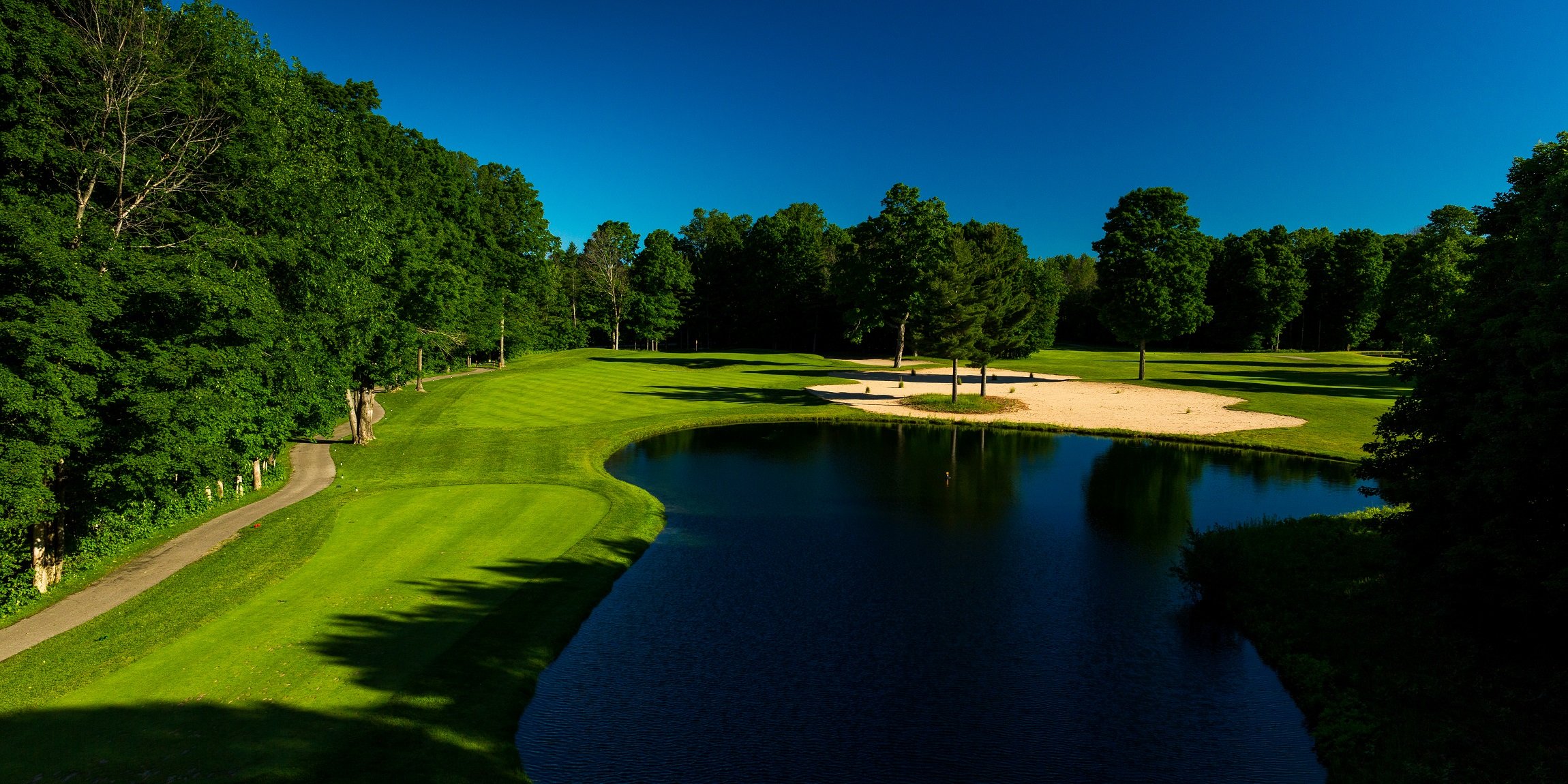
My first look at the improved Mountain Ridge came into very clear view behind hole No. 2; a downhill par three with water on the left. They cleared out most of the trees behind the green, leaving about a dozen of the tallest and fullest ones, but it provides so much more open views and airflow to other parts of the course. A great addition by subtraction.
More changes became clear at hole No. 14, a long par five that turns slightly right to left. They’ve remove some large trees on the right side that used to jet out into the fairway so there’s more of an open path now to the green, which is tiered, with lots of undulation. No. 15 has an elevated tee with waste sand going down the entire left side of the fairway to not mess around with, but is an easier medium par 4 compared to others.
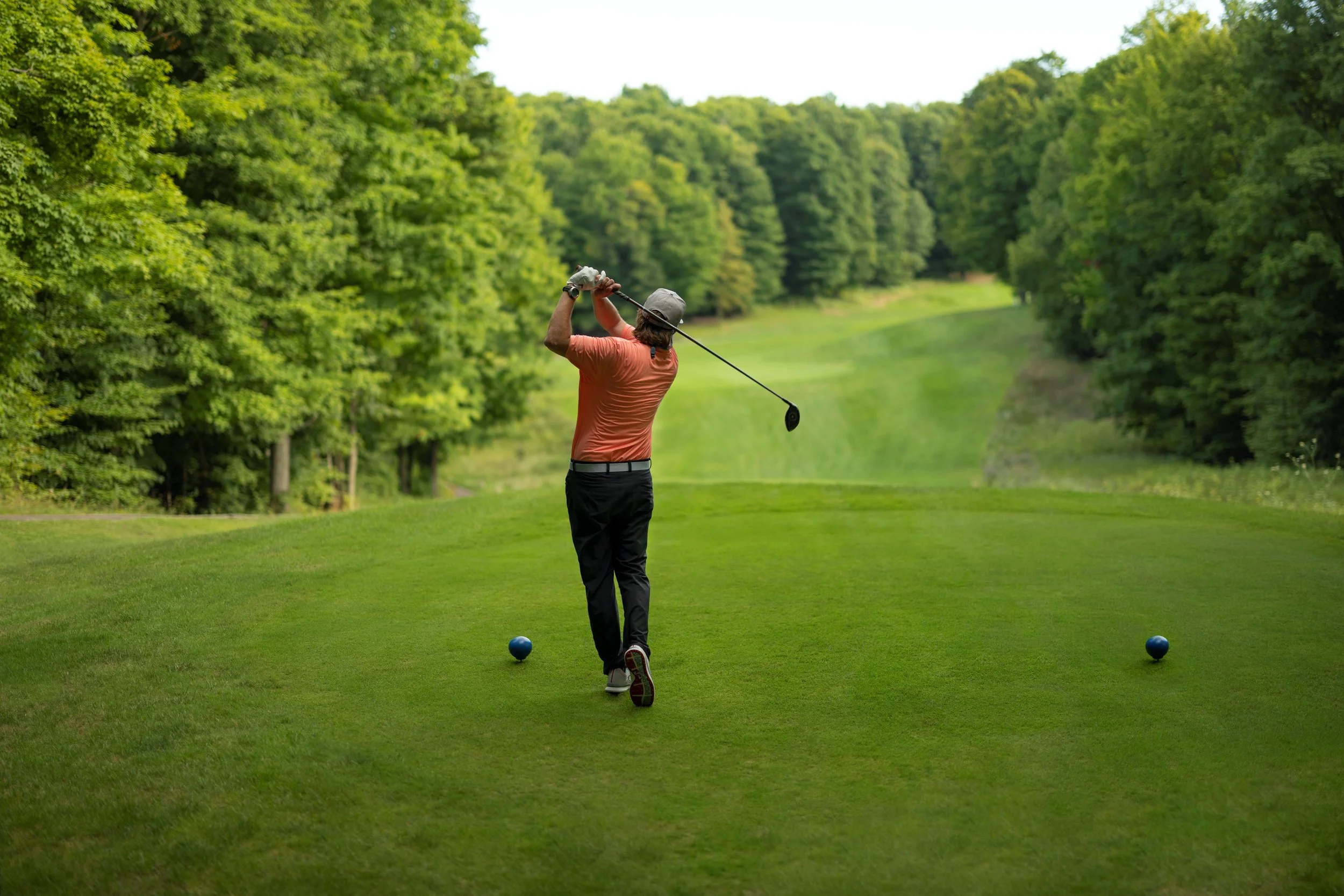
Then comes the long cart ride up the hill to the 16th tee that traverses back and forth through the thickness of trees to climb the mountain. The elevated tees at 16 look out over a natural valley before you get back to the fairway and the hole turns right and goes uphill to a green that’s protected by a smaller bunker on the left and a huge one on the right. This can be a very tough par four. It’s not rated the number one handicap but I personally think it’s the toughest hole on the course as far as navigating trouble and shaping it around the corner to get a chance at a decent approach shot.
Hole 17 is a very beautiful downhill par three where you take at least one, probably two less clubs to get the right distance. Even if you land short of green, there’s a good opportunity that the ball will propel forward and settle onto the green.
No. 18 gradually continues downhill – the backside of the mountain – to a large two tiered green. All in all, 18 is one of the nicer finishing holes around, and is an integral part of one the best finishing stretches of three holes, anywhere in Michigan.